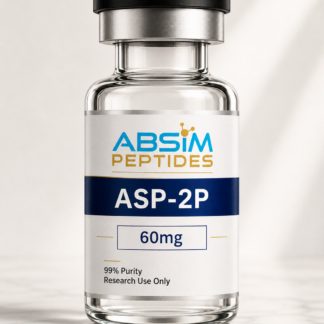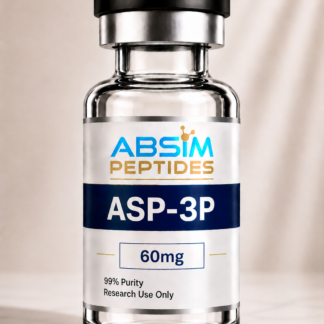
If you’ve ever searched “are peptides legal?” or “what peptides are legal in the U.S.?”, you’ve probably noticed there’s a lot of conflicting information. Some peptides are available as FDA-approved prescription medications, while others are supplied exclusively for laboratory research. That difference often leads people to assume that non-approved peptides are automatically illegal or ineffective, but the reality is more nuanced.
The legal status of a peptide depends on several factors, including how it’s regulated, whether it has gone through the FDA approval process for a specific use, and how it’s marketed or distributed. In this guide, we’ll explain why some peptides are FDA-approved while others remain research-only, review examples of approved peptides, and answer common questions about peptide legality in the United States.
Understanding the Context Behind Peptides’ Legal Status
Before looking at individual peptides, it’s helpful to understand what “legal” actually means.
Some peptides have been evaluated by the U.S. Food and Drug Administration (FDA) and approved as prescription medications for specific medical conditions. These products can be legally prescribed and dispensed for their approved uses.
Many other peptides, however, have not received FDA approval as drugs. That doesn’t necessarily mean the peptide itself is prohibited. In many cases, it simply means the compound hasn’t completed the FDA’s drug approval process or is intended exclusively for laboratory research rather than medical use.
It’s also worth remembering that FDA approval and legality are not always the same thing. Different peptides may fall under different regulatory frameworks depending on their intended use, how they’re marketed, and whether they’re approved as prescription medications.
The Real Reason Why Some Peptides Are Not FDA Approved
One of the biggest misconceptions is that peptides aren’t approved simply because they don’t work. In reality, the approval process is much more complex.
Developing a new prescription medication requires years of laboratory research, clinical trials, manufacturing validation, and regulatory review. Completing that process often costs hundreds of millions of dollars and, in some cases, more than a billion dollars.
For pharmaceutical companies, those investments are typically supported by patents or other forms of market exclusivity that help protect the significant costs of development. Some peptides have been known for many years or may not qualify for the same type of patent protection as newly developed compounds. As a result, companies may have less financial incentive to pursue FDA approval, even when scientific research continues to explore those compounds.
That doesn’t mean every non-approved peptide has been proven safe or effective. Rather, it means FDA approval depends on both scientific evidence and the resources required to complete the regulatory process.
It’s also important to recognize that regulatory requirements vary between countries. Some peptide-based medications may be approved for specific uses outside the United States under different regulatory agencies, while remaining unapproved by the FDA.
Examples of FDA-Approved Peptides in the U.S.
While many peptides are still being studied, several peptide-based medications have completed the FDA approval process for specific medical uses. The examples below highlight some well-known FDA-approved peptides and the conditions they’re approved to treat. This isn’t a complete list, but it provides a snapshot of how peptide-based therapies are currently used in clinical practice.
| Peptide | FDA-Approved Indication(s) | Approval Status |
|---|---|---|
| Semaglutide | Type 2 diabetes and chronic weight management (specific approved products) | FDA-approved prescription medication |
| Tirzepatide | Type 2 diabetes and chronic weight management (specific approved products) | FDA-approved prescription medication |
| Liraglutide | Type 2 diabetes and chronic weight management | FDA-approved prescription medication |
| Teriparatide | Osteoporosis in certain patients | FDA-approved prescription medication |
| Calcitonin | Certain bone-related conditions | FDA-approved prescription medication |
| Glucagon | Severe hypoglycemia | FDA-approved prescription medication |
| Desmopressin | Diabetes insipidus and other approved indications | FDA-approved prescription medication |
As the table shows, peptide-based medications already play an important role in modern healthcare. However, each of these products underwent extensive testing and FDA review for specific indications. That approval doesn’t automatically apply to other peptides or different uses, which is why it’s important to distinguish FDA-approved medications from research-grade peptides that are intended exclusively for laboratory research.
Can I Use Peptides Even Though They Are Not All FDA-Approved?
This question depends on the type of peptide and its intended purpose.
FDA-approved peptide medications may be prescribed by licensed healthcare providers for their approved uses. Research-grade peptides, on the other hand, are supplied exclusively for laboratory research and are not approved for use as medications.
It’s also important to avoid assuming that a peptide is either “safe” or “unsafe” based solely on whether it has FDA approval. FDA approval reflects that a product has met the agency’s standards for a specific medical use based on available evidence. Peptides that haven’t received FDA approval may still be the subject of ongoing scientific research, but they should not be considered approved medicines unless the FDA has authorized them for that purpose.
As research continues, additional peptide-based therapies may move through the regulatory process and receive approval for specific indications.
Key Takeaways
- The question isn’t simply whether a peptide is FDA approved. Its regulatory status depends on factors such as its intended use, how it’s classified, and whether it has completed the FDA approval process.
- Some peptides are FDA-approved prescription medications used to treat specific conditions, while others are available for laboratory research and have not been approved for medical use. Understanding that distinction helps explain why the peptide landscape can seem confusing at first.
- For laboratories interested in research-grade peptides, reviewing documentation such as Certificates of Analysis (COAs), purity information, and batch specifications is an important part of selecting materials for scientific research.
Explore Research-Grade Peptides from ABSIM Peptides
Whether you’re studying peptide chemistry, exploring new areas of laboratory research, or sourcing materials for ongoing scientific projects, choosing a trusted supplier matters. ABSIM Peptides provides high-quality research-grade peptides backed by detailed product documentation, including Certificates of Analysis (COAs), purity information, and batch specifications to support laboratory research.
Browse our research-grade peptide catalog to explore products developed exclusively for scientific and laboratory use.
Sources
- U.S. Food and Drug Administration (FDA). The Drug Development Process. https://www.fda.gov/patients/learn-about-drug-and-device-approvals/drug-development-process
- U.S. Food and Drug Administration (FDA). Orange Book: Approved Drug Products with Therapeutic Equivalence Evaluations. https://www.accessdata.fda.gov/scripts/cder/ob/