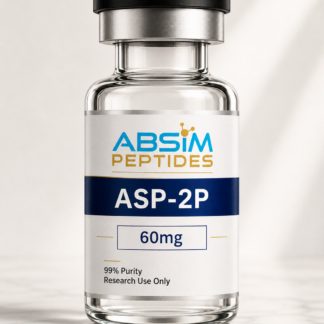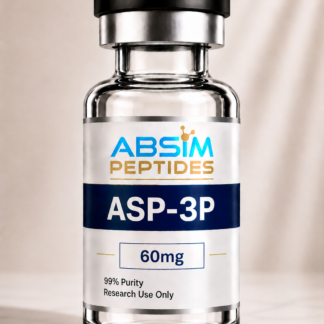
If you’ve ever shopped for research peptides, you’ve probably noticed that many suppliers source their products from outside the United States. That often raises questions like, “Are peptides made in the USA better?” or “Should I only buy from a U.S. supplier?”
The answer may be simpler than you think. When evaluating research-grade peptides, the country where they’re manufactured is only one piece of the puzzle. What matters most is whether you’re receiving the compound you ordered and whether the supplier provides documentation to verify its quality. In this guide, we’ll explain why Certificates of Analysis (COAs) are so important, why many peptides are manufactured outside the U.S., and what researchers should look for when selecting a trusted peptide supplier.
Understanding the Certificates of Analysis
One of the most important documents that accompanies a research-grade peptide is the Certificate of Analysis (COA). A COA summarizes the results of laboratory testing performed on a specific production batch and helps researchers verify that the material matches its documented specifications.
Many researchers begin by reviewing the reported purity of a peptide. A high purity result, such as 99% or greater when supported by testing, indicates that the sample consists primarily of the intended peptide. However, purity is only one part of the overall quality assessment.
A complete COA may also include information about identity testing, batch numbers, analytical methods, and other product specifications. Together, these details help laboratories evaluate whether the material meets the documented characteristics expected for research.
Rather than focusing solely on where a peptide was manufactured, experienced researchers often prioritize transparent documentation that allows them to assess product quality objectively.
Why Does Everyone Buy from Outside the US?
One of the biggest misconceptions is that peptides manufactured outside the United States are automatically lower quality. In reality, the country of origin doesn’t determine whether a peptide matches its documented specifications.
Instead, researchers typically focus on measurable factors such as purity testing, identity verification, and the documentation provided by the supplier. A well-documented peptide manufactured outside the U.S. may meet the same documented specifications as one produced elsewhere.
Cost is another reason many peptide manufacturers operate outside the United States. Manufacturing within FDA-regulated facilities generally involves higher production, compliance, and operating costs. Those additional expenses can significantly increase the final cost of peptide products.
For research applications, many laboratories place greater importance on verified testing results and supplier transparency than on the country where a peptide was manufactured.
How to Assess the Quality of a Peptide
Choosing a peptide supplier involves more than looking at price or country of origin. Reviewing the available documentation can provide a better understanding of the quality standards behind a product.
The table below highlights several factors researchers commonly evaluate when selecting research-grade peptides.
| Factor | Why It Matters |
|---|---|
| Certificate of Analysis (COA) | Documents testing results for a specific production batch. |
| Purity | Indicates the percentage of the target peptide present in the sample. |
| Identity Testing | Confirms the material matches the intended peptide sequence. |
| Batch Information | Supports traceability and consistency between production lots. |
| Supplier Transparency | Demonstrates that product documentation and specifications are readily available. |
As the table shows, assessing peptide quality involves reviewing multiple measurable factors rather than relying on a single characteristic. While purity is an important consideration, documentation, batch traceability, and supplier transparency all contribute to a more complete evaluation of research materials.
Are U.S.-Made Peptides Better Than Imported Peptides?
It’s easy to assume that a peptide manufactured in the United States is automatically better than one produced elsewhere, but that’s not necessarily the case.
For research-grade peptides, quality depends on whether the product matches its documented specifications, not simply where it was manufactured. That’s why researchers often focus on Certificates of Analysis (COAs), analytical testing, and supplier transparency when comparing products.
Price is another important consideration. Manufacturing within FDA-regulated facilities generally comes with higher production and compliance costs, which are often reflected in the final price. Imported peptides may be available at a lower cost, but researchers should still evaluate the supporting documentation before making purchasing decisions.
Ultimately, the goal is to work with a supplier that provides clear testing documentation, consistent quality standards, and transparent product information, regardless of where the peptide was manufactured.
Key Takeaways
- The most important question isn’t where a peptide was made. It’s whether the supplier can demonstrate that the product matches its documented specifications.
- Certificates of Analysis, purity testing, batch information, and supplier transparency provide researchers with valuable information for evaluating research-grade peptides. Looking beyond the country of origin allows laboratories to make informed decisions based on measurable quality rather than assumptions.
Explore Research-Grade Peptides Supported by Transparent Documentation
When selecting research-grade peptides, documentation matters just as much as the product itself. Reviewing Certificates of Analysis (COAs), purity information, and batch specifications can help laboratories confidently evaluate the materials they purchase.
At ABSIM Peptides, every research-grade peptide is supplied exclusively for laboratory research and is backed by detailed Certificates of Analysis (COAs), purity information, and batch documentation to support scientific research. Explore our research-grade peptide catalog to find research-grade peptides supported by transparent documentation.
Sources
- U.S. Food and Drug Administration (FDA). Questions and Answers on Current Good Manufacturing Practice Requirements: Control of Components and Drug Product Containers and Closures. https://www.fda.gov/drugs/guidances-drugs/questions-and-answers-current-good-manufacturing-practice-requirements-control-components-and-drug
- U.S. Food and Drug Administration (FDA). Q7 Good Manufacturing Practice Guidance for Active Pharmaceutical Ingredients (Guidance for Industry). https://www.fda.gov/files/drugs/published/Q7-Good-Manufacturing-Practice-Guidance-for-Active-Pharmaceutical-Ingredients-Guidance-for-Industry.pdf