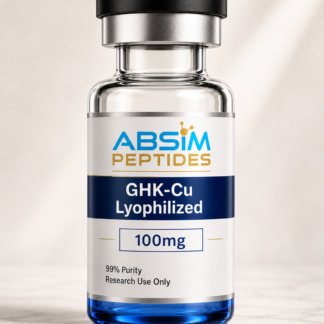

GHK-cu 100mg
$25.00 – $159.00Price range: $25.00 through $159.00
This product is intended as a research chemical only. This designation allows the use of research chemicals strictly for in vitro testing and laboratory experimentation only. All product information available on this website is for educational purposes only. Bodily introduction of any kind into humans or animals is strictly forbidden by law. This product should only be handled by licensed, qualified professionals. This product is not a drug, food, or cosmetic and may not be misbranded, misused, or mislabeled as a drug, food, or cosmetic.
Additional information
| SKU | GHKCU10020260423-01 |
|---|---|
| Categories | Peptides |
| Weight | 1 lbs |
| Dimensions | 3 × 2 × 2 in |
| MG | 100 |
| Purchase Type | Single, 10 Pack |
GHK-Cu Peptide
GHK-Cu (Glycyl-L-histidyl-L-lysine copper complex) is a naturally occurring tripeptide that was first isolated from human blood plasma. Traces of this peptide have also been identified in saliva and urine. Preclinical research has explored its potential roles in tissue repair, modulation of certain immunological responses, and various regenerative processes.
Specifications
- Molecular Formula: C14H23CuN6O4
- Molecular Weight: 340.38 g/mol
- Sequence: Gly-His-LysCu.xHAc (Glycyl-L-histidyl-L-lysine copper complex)
GHK-Cu Peptide Research
GHK-Cu and Skin Cells
GHK-Cu is a natural component of blood and has been investigated in skin models for its potential effects on dermal regeneration. Laboratory studies suggest it may influence the synthesis and breakdown of collagen, glycosaminoglycans, proteoglycans, and chondroitin sulfate in the extracellular matrix. These actions appear partly mediated through the recruitment of fibroblasts, endothelial cells, and immune cells to wound sites, coordinating their activity during repair processes.
Research has also examined GHK-Cu’s potential modulation of collagen synthesis, possibly involving transforming growth factor beta (TGF-β) pathways and alterations in gene expression. In mouse burn wound models, GHK-Cu has been associated with increased wound healing rates, enhanced recruitment of immune cells and fibroblasts, and promotion of new blood vessel formation.
GHK-Cu and Cognitive / Nervous System Functions
Preclinical studies have explored GHK-Cu’s potential to support neuronal function in models of degenerative conditions. Research suggests it may help inhibit loss of neuronal function, promote angiogenesis in nervous tissue, stimulate nerve outgrowth, and reduce central nervous system inflammation. Some studies indicate it may influence pathological gene expression profiles and support neuroprotective mechanisms.
In rat models of brain injury (such as stroke or hemorrhage), GHK-Cu has been linked to protection against neuronal apoptosis via the miR-339-5p/VEGFA pathway, improvements in neurological deficits, reduced brain swelling, and decreased neuronal death associated with miR-339-5p overexpression. Natural levels of GHK-Cu are known to decline with age.
GHK-Cu and Bacteria
Research has investigated GHK-Cu, particularly in combination with certain fatty acids, for potential antimicrobial properties against bacteria and fungi that can interfere with tissue repair. In diabetic wound models, combining GHK-Cu with standard procedures was associated with improved wound closure rates and reduced infection rates compared to controls. Similar findings have been reported in ischemic wound studies, where GHK-Cu was linked to suppressed inflammation through reduced levels of acute-phase cytokines such as TGF-β and TNF-α.
GHK-Cu and Lungs
Murine studies have examined GHK-Cu’s potential protective effects against lung fibrosis. Research suggests it may modulate inflammatory cytokines including TNF-α and IL-6, support collagen production, and help prevent fibrotic remodeling in lung tissue. It has also been studied in models of acute respiratory distress syndrome (ARDS), where it was associated with reduced expression of TNF-α and IL-6.
In cigarette smoke-induced emphysema models, GHK-Cu exposure was linked to reduced lung inflammation, lower levels of IL-1β and TNF-α in bronchoalveolar lavage fluid, decreased myeloperoxidase (MPO) activity, and suppression of the NF-κB pathway through modulation of IκBα phosphorylation. It was also associated with reduced i-NOS levels.
GHK-Cu and Pain Perception
In rat models, GHK-Cu has been studied for concentration-dependent effects on pain-induced behavior. Research suggests potential analgesic properties mediated through increased levels of L-lysine. Additional studies have explored its possible influence on L-arginine levels and related analgesic mechanisms.
GHK-Cu and Oxidative Stress
Preclinical research has proposed that GHK-Cu may help regulate iron release from ferritin, potentially reducing iron-catalyzed lipid peroxidation and inflammation in damaged tissues. Studies indicate it may restrict iron complex formation, with one report noting an approximate 87% reduction in iron release under certain conditions.
The palmitoylated form (Pal-GHK) has been investigated for its ability to decrease reactive oxygen species and inflammatory cytokines while supporting antioxidant enzyme activity. In mouse models, Pal-GHK was associated with inhibition of NF-κB and p38 MAPK signaling pathways, leading to reduced inflammatory cell infiltration and lower production of TNF-α and IL-6 in lung tissues.
Important Disclaimer
The products mentioned are intended strictly for laboratory research and in-vitro experimentation. They are not for human or animal consumption. Bodily introduction is strictly prohibited. All information provided is for educational purposes only and does not constitute medical advice. Always refer to our terms and conditions.
This product is strictly for research/laboratory use only. Human or animal use and/or consumption is strictly prohibited by law. Only qualified and licensed professionals should handle these products. Any information found on this site is strictly for educational purposes only. Refer to our terms and conditions for more details.
References
- Pickart L, Margolina A. Regenerative and Protective Actions of the GHK-Cu Peptide in the Light of the New Gene Data. Int J Mol Sci. 2018 Jul 7;19(7):1987. doi: 10.3390/ijms19071987. PMID: 29986520; PMCID: PMC6073405.
- Pickart L, Vasquez-Soltero JM, Margolina A. The Effect of the Human Peptide GHK on Gene Expression Relevant to Nervous System Function and Cognitive Decline. Brain Sci. 2017 Feb 15;7(2):20. doi: 10.3390/brainsci7020020. PMID: 28212278; PMCID: PMC5332963.
- Pickart L, Vasquez-Soltero JM, Margolina A. The human tripeptide GHK-Cu in prevention of oxidative stress and degenerative conditions of aging: implications for cognitive health. Oxid Med Cell Longev. 2012;2012:324832. doi: 10.1155/2012/324832. Epub 2012 May 10. PMID: 22666519; PMCID: PMC3359723.
- Zhou XM, Wang GL, Wang XB, Liu L, Zhang Q, Yin Y, Wang QY, Kang J, Hou G. GHK Peptide Inhibits Bleomycin-Induced Pulmonary Fibrosis in Mice by Suppressing TGFβ1/Smad-Mediated Epithelial-to-Mesenchymal Transition. Front Pharmacol. 2017 Dec 12;8:904. doi: 10.3389/fphar.2017.00904. PMID: 29311918; PMCID: PMC5733019.
- Park JR, Lee H, Kim SI, Yang SR. The tri-peptide GHK-Cu complex ameliorates lipopolysaccharide-induced acute lung injury in mice. Oncotarget. 2016 Sep 6;7(36):58405-58417. doi: 10.18632/oncotarget.11168. PMID: 27517151; PMCID: PMC5295439.
- Zhang, Q., Yan, L., Lu, J., & Zhou, X. (2022). Glycyl-L-histidyl-L-lysine-Cu2+ attenuates cigarette smoke-induced pulmonary emphysema and inflammation by reducing oxidative stress pathway. Frontiers in molecular biosciences, 9, 925700. https://doi.org/10.3389/fmolb.2022.925700
- Sever’yanova LА, Dolgintsev ME. Effects of Tripeptide Gly-His-Lys in Pain-Induced Aggressive-Defensive Behavior in Rats. Bull Exp Biol Med. 2017 Dec;164(2):140-143. doi: 10.1007/s10517-017-3943-3. Epub 2017 Nov 27. PMID: 29181666
- Sever’yanova LА, Plotnikov DV. Binding of Glyprolines to L-Arginine Inverts Its Analgesic and Antiagressogenic Effects. Bull Exp Biol Med. 2018 Sep;165(5):621-624. doi: 10.1007/s10517-018-4227-2. Epub 2018 Sep 17. PMID: 30225713
- Miller, D. M., DeSilva, D., Pickart, L., & Aust, S. D. (1990). Effects of glycyl-histidyl-lysyl chelated Cu(II) on ferritin dependent lipid peroxidation. Advances in experimental medicine and biology, 264, 79–84. https://doi.org/10.1007/978-1-4684-5730-8_11
- Sakuma, S., Ishimura, M., Yuba, Y., Itoh, Y., & Fujimoto, Y. (2018). The peptide glycyl-ʟ-histidyl-ʟ-lysine is an endogenous antioxidant in living organisms, possibly by diminishing hydroxyl and peroxyl radicals. International journal of physiology, pathophysiology and pharmacology, 10(3), 132–138.
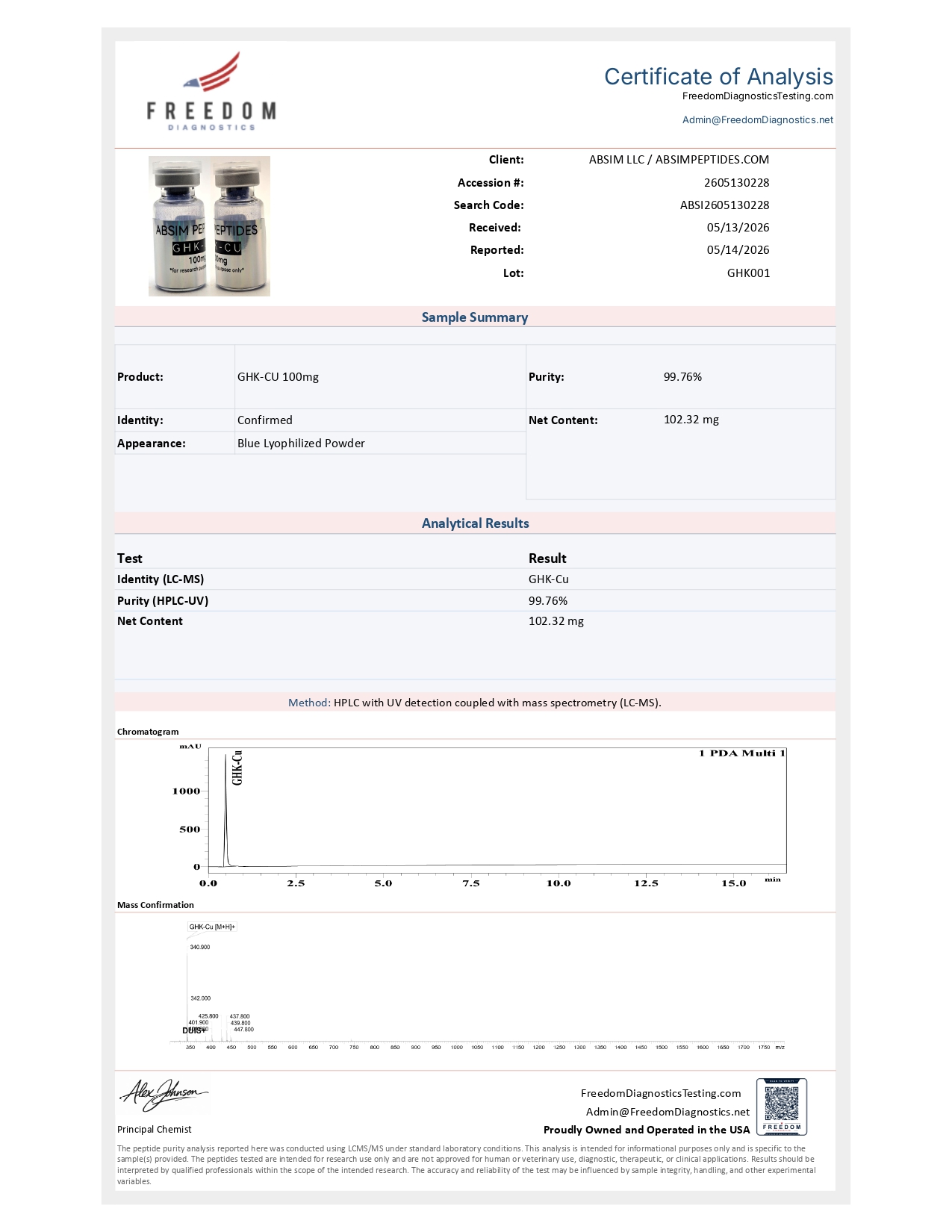
Additional information
| SKU | GHKCU10020260423-01 |
|---|---|
| Categories | Peptides |
| Weight | 1 lbs |
| Dimensions | 3 × 2 × 2 in |
| MG | 100 |
| Purchase Type | Single, 10 Pack |
Related products
-
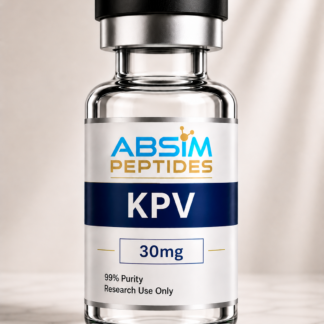
KPV 30mg
$54.00 – $360.00Price range: $54.00 through $360.00 Select options This product has multiple variants. The options may be chosen on the product page -
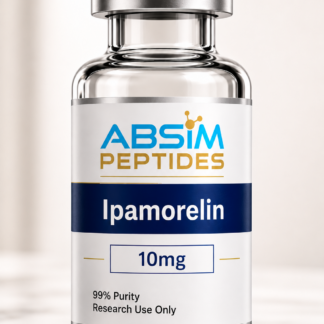
Ipamorelin 10mg
$29.00 – $175.00Price range: $29.00 through $175.00 Select options This product has multiple variants. The options may be chosen on the product page -
SEMAX 10mg
$21.00 – $140.00Price range: $21.00 through $140.00 Select options This product has multiple variants. The options may be chosen on the product page -
KLOW 80mg
$65.75 – $455.00Price range: $65.75 through $455.00 Select options This product has multiple variants. The options may be chosen on the product page